
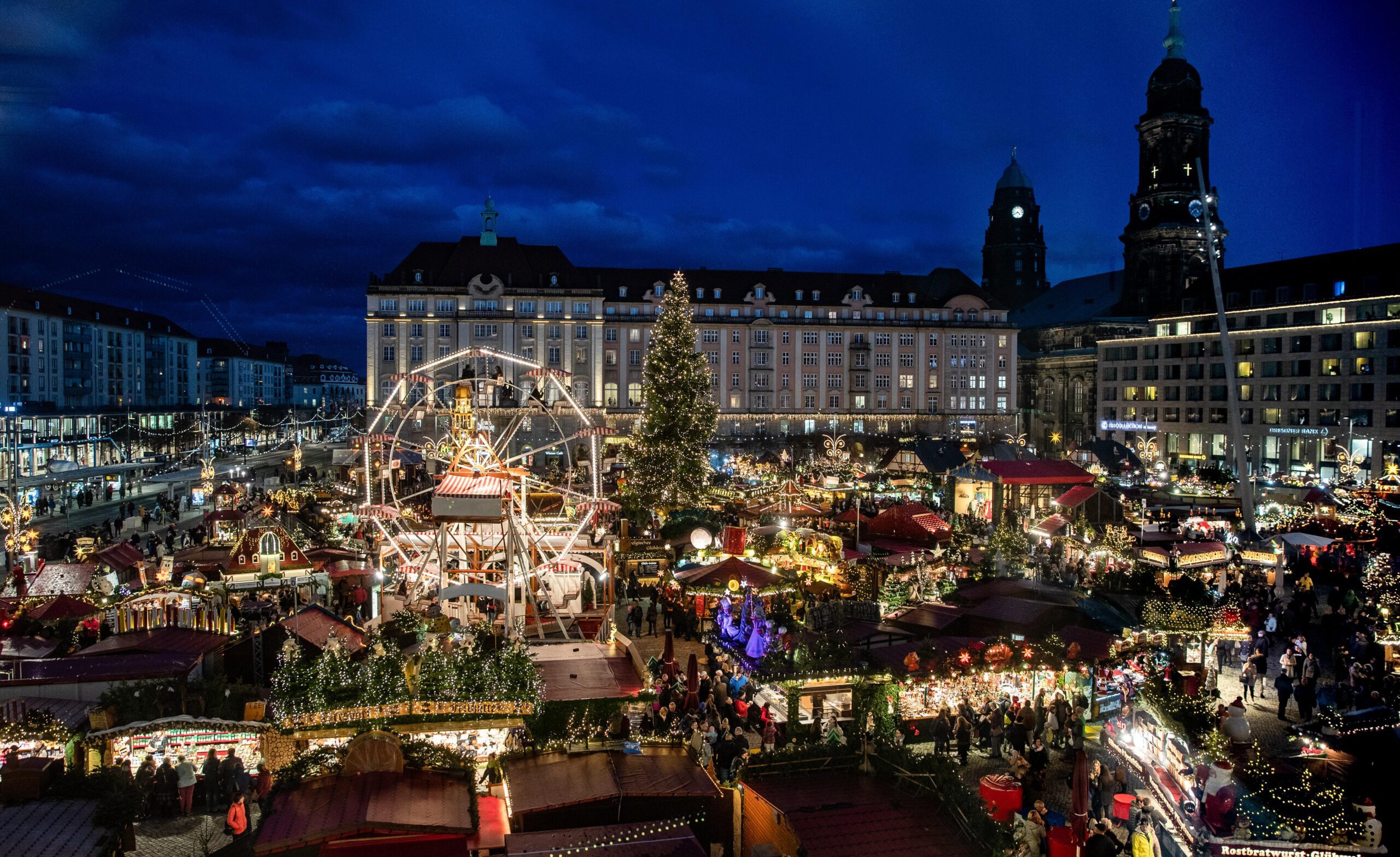
Few travel experiences feel as good as a European Christmas market. Wooden stalls glow against the early dark, the air smells of cinnamon and roasting almonds, and a warm mug of mulled wine thaws your fingers while a brass band plays carols nearby. But Europe has thousands of Christmas markets, and they are not interchangeable. Some are grand and crowded, others small and quiet. Some are about shopping, others about food, and a few are really about the setting.
Choosing well matters, especially if you only have a few days. Here are five of the best, along with who each one suits.
Strasbourg, France: For Fairy-Tale Atmosphere
Strasbourg calls itself the “Capital of Christmas,” and it has earned the title. Its markets date back to 1570, among the oldest in Europe, and they spread across the old town in a dozen or so locations. The centerpiece is the enormous Christmas tree in Place Kléber. The real draw is the Gothic cathedral, whose spire looks even more dramatic when lit up at night.
The food is a highlight. Alsatian cuisine mixes French and German influences, so expect tarte flambée, bredele (small spiced Christmas cookies), pretzels, and vin chaud made with the region’s excellent wines. The half-timbered buildings of the Petite France district look like a movie set, and the canals add to the effect.
Strasbourg is best for couples, photographers, and anyone who wants the postcard version of Christmas. It is also compact and easy to walk. The downside is that its popularity means weekends get very crowded, so visit midweek if you can. November 27 – December 24, 2026
Explore Area Hotels

Vienna, Austria: For Elegance and Culture
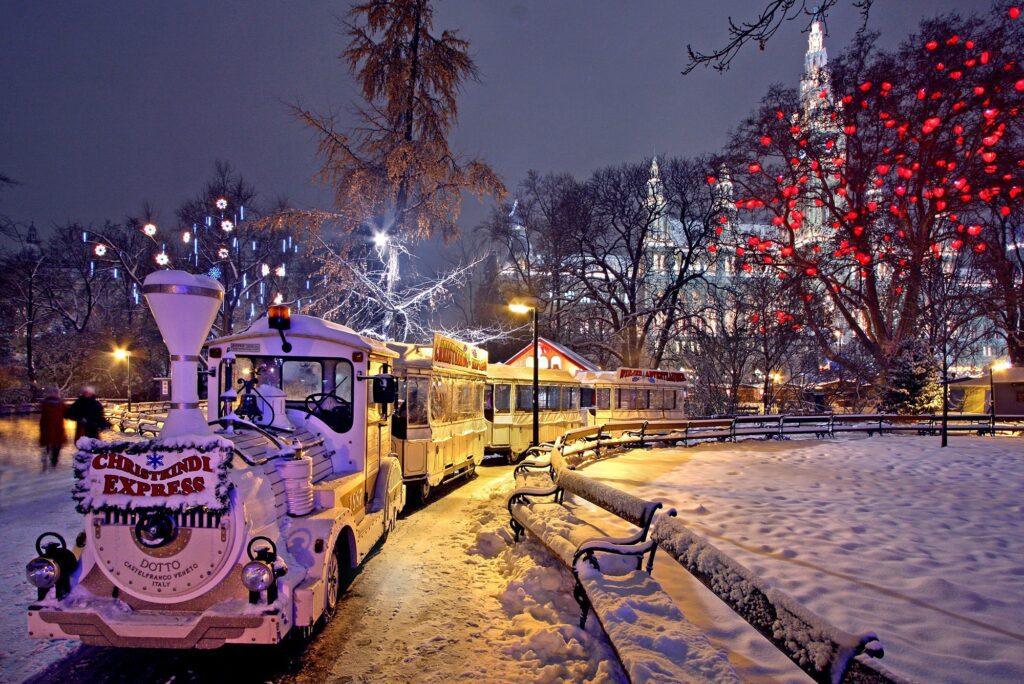
Vienna does Christmas the way it does everything else, with grandeur. The best-known market sits in front of the neo-Gothic City Hall, but there are many more, including ones at Schönbrunn Palace, Belvedere Palace, and the Spittelberg quarter, which has a cozy, artisan feel.
What sets Vienna apart is the way the markets fit into the city’s wider culture. You can browse handmade ornaments in the afternoon, then attend a classical concert in the evening. Café culture helps, too. When the cold gets to you, you can duck into a historic coffeehouse for a slice of Sachertorte instead of another cup of punsch.
This is the market for visitors who want Christmas combined with museums, music, and architecture. It works especially well for first-time visitors to Europe, and for travelers who like to mix outdoor browsing with indoor warmth. Prices tend to be a little higher than in Central and Eastern Europe, but the quality of the crafts and food is consistently high. Early November – January 2027
Nuremberg, Germany: For Tradition
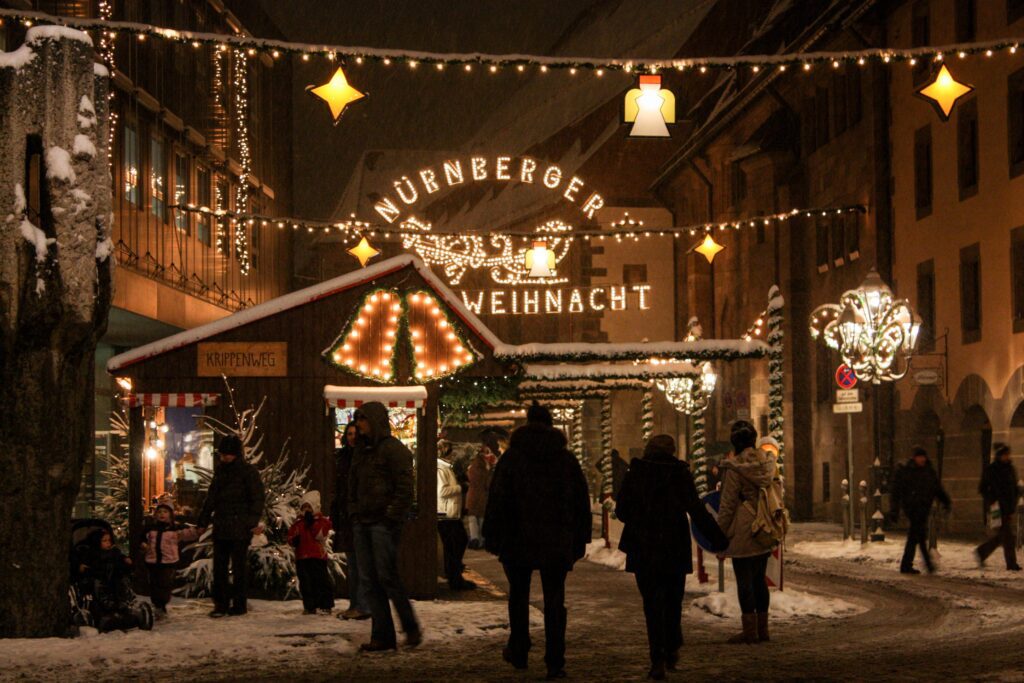
If you want the classic German Christmas market, go to Nuremberg. The Christkindlesmarkt in the main square is one of the country’s most famous, and it opens with a ceremony in which a young person dressed as the “Christkind” delivers a prologue from the balcony of the Frauenkirche.
Tradition runs through everything here. The stalls are uniform in their red-and-white striped canopies, and many of the goods are local specialties: Lebkuchen (soft gingerbread), the quirky “Zwetschgenmännle” figures made of dried plums, and wooden toys. Nuremberg’s small sausages, served in threes on a bun, are the local street food to try.
The city also has a more serious side, with a medieval castle and important history museums, so it suits travelers who like to learn as well as shop and snack. Because the market is so focused on German tradition, it appeals to families and to anyone who wants the “authentic” experience. One caution: the market is busy, and the crowd around the main square can be dense in the evenings. November 27 to December 24, 2026
Prague, Czech Republic: For Value and Old-World Charm
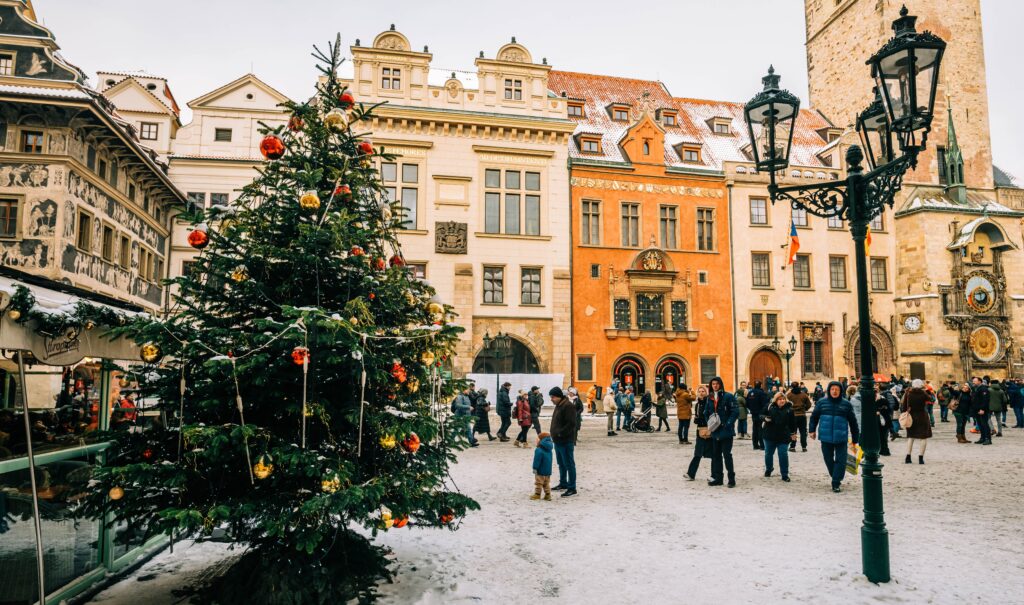
Prague’s Christmas markets have grown in popularity, and it is easy to see why. The main ones fill the Old Town Square and Wenceslas Square, with the Astronomical Clock and the twin spires of Týn Church as a backdrop. The cobbled lanes and gothic buildings make the whole city feel like part of the display.
Prague is also easier on the wallet than Western Europe. Food and drink cost less, and you can eat well on a modest budget. Try trdelník (a sweet rolled pastry), roasted chestnuts, grilled sausages, and svařák, the Czech mulled wine. Traditional crafts to look for include wooden toys, Bohemian glass, and beautiful hand-painted ornaments.
It suits budget travelers, groups of friends, and anyone who wants a lively city break. The trade-off is that the central markets can feel touristy. To avoid the worst of it, wander toward smaller markets in neighborhoods like Náměstí Míru or Havel’s Market, where the crowds thin out. November 28, 2026, to January 6, 2027
Explore Area Hotels
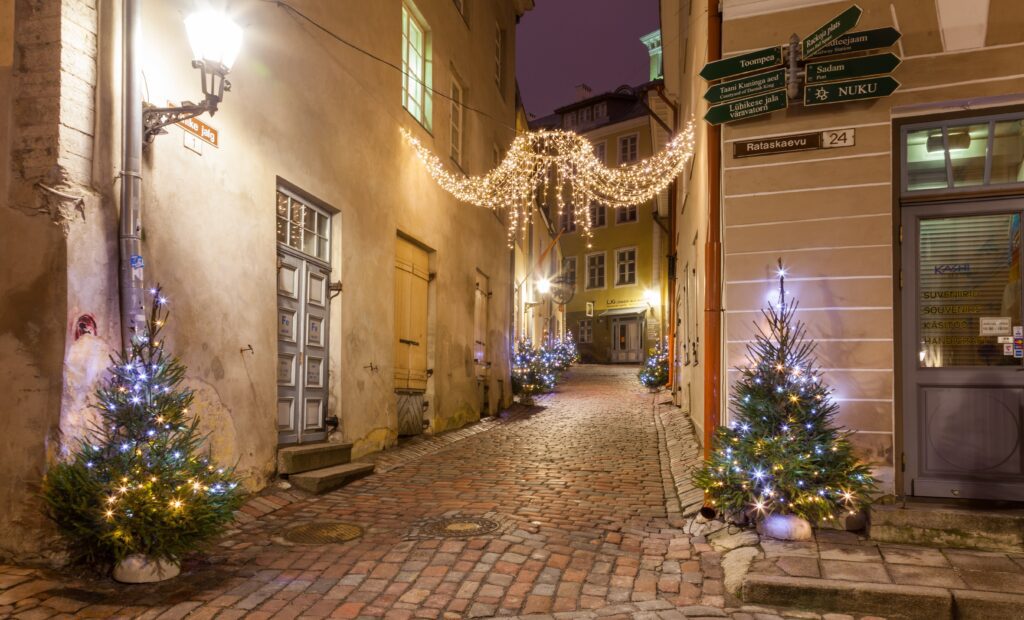
Tallinn, Estonia: For Something Different
Tallinn is the wild card on this list, and it is the one most likely to surprise you. The medieval Old Town is one of the best-preserved in Northern Europe, and its Town Hall Square hosts a market that feels like a step back in time. There is a real tree in the square, and the claim is that Tallinn put up the first public Christmas tree in Europe back in 1441.
The atmosphere is more intimate than the bigger Central European markets. Expect handmade woolens, ceramics, and honey products, plus Estonian specialties such as blood sausage with lingonberry jam, gingerbread, and hot, spiced glögi. Winter in the Baltics is cold and dark, which makes the lights and fires feel even more welcoming, and the odds of seeing snow are better here than in much of Europe.
Tallinn suits adventurous travelers, anyone tired of the usual circuit, and people who prefer small, quieter markets. It is also a good value, and the city is very walkable. Pack serious winter layers. November 20, 2026, to January 6, 2027′
How to Pick: A Quick Guide
If you are still undecided, match the market to your priorities:
- Romance and photography: Strasbourg
- Culture and elegance: Vienna
- Tradition and family fun: Nuremberg
- Budget and nightlife: Prague
- Off-the-beaten-path charm: Tallinn
You can also combine them. Nuremberg, Prague, and Vienna are linked by good rail routes, so a three-city trip is realistic in about a week. Strasbourg pairs naturally with a visit to Colmar and other Alsatian villages.
Practical Tips for Visiting
Check dates early. Most markets open in late November and run until Christmas Eve or a few days after, but opening dates vary by city and year. Confirm on each market’s official site before booking.
Book early. Hotels in popular market cities fill up fast, and prices rise as December approaches. Weekends in particular sell out.
Go on weekdays and earlier in the day. Late afternoon is lovely for the lights, but evenings and weekends bring the biggest crowds. Arriving at opening time means quieter stalls and better photos.
Carry cash and small change. Many stalls take cards now, but some still prefer cash, and small amounts make buying a mug of wine or a snack much easier.
Expect a mug deposit. At many markets, hot drinks come in collectible mugs with a deposit. Return the mug for your money back, or keep it as a souvenir.
Dress for the cold. You will spend hours outside, so wear thermal layers, waterproof shoes, and gloves. Cold feet are the fastest way to ruin a market evening.
Watch your belongings. Crowds attract pickpockets in every large European city, so keep your bag zipped and in front of you.
The Bottom Line
There is no single best Christmas market in Europe, only the best one for the kind of trip you want. Strasbourg gives you fairy-tale scenery, Vienna brings polish and music, Nuremberg delivers tradition, Prague offers value, and Tallinn feels like a discovery. Whichever you choose, go with warm layers, an appetite, and a willingness to linger over one more mug of something hot. That is the real secret of a European Christmas.