
Everyone talks about Lisbon. Fewer people talk about Porto — and that’s exactly why you should go.
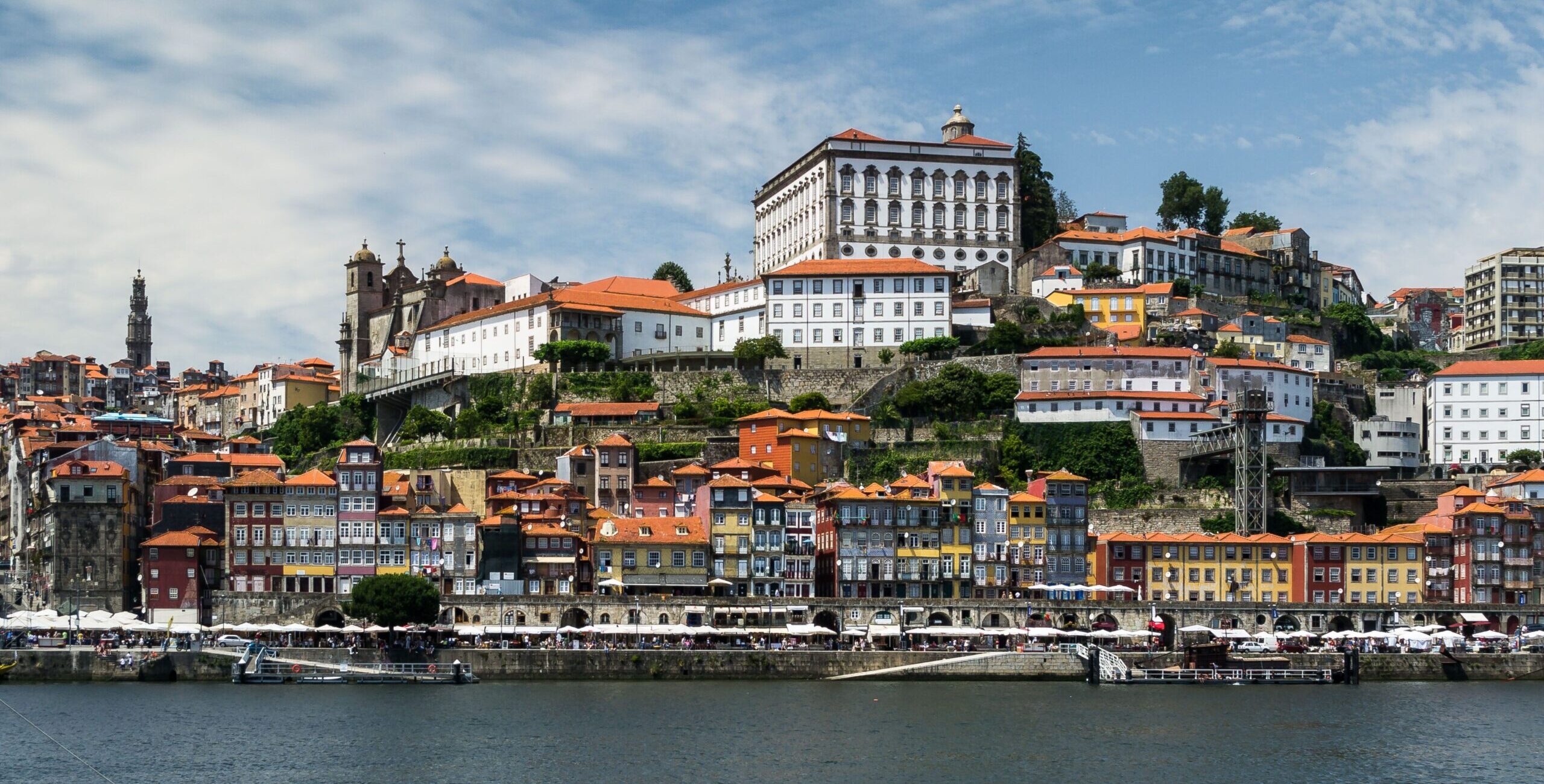
Portugal’s second city sits stacked on hills above the Douro River, all faded tilework, port wine cellars, and iron bridges. It’s smaller than Lisbon, easier to walk end to end, and noticeably cheaper. Three days is enough time to get properly lost in it, eat more than you should, and still leave wanting more.
Here’s how to spend them.
Day 1: Ribeira, the River, and Your First Glass of Port
Start in Ribeira, Porto’s UNESCO-listed old quarter and the most photogenic part of the city. The narrow streets tumble down toward the Douro, lined with laundry-strung balconies and tiny cafés. Arrive early, before the tour groups do, and just wander — this neighborhood rewards no agenda.
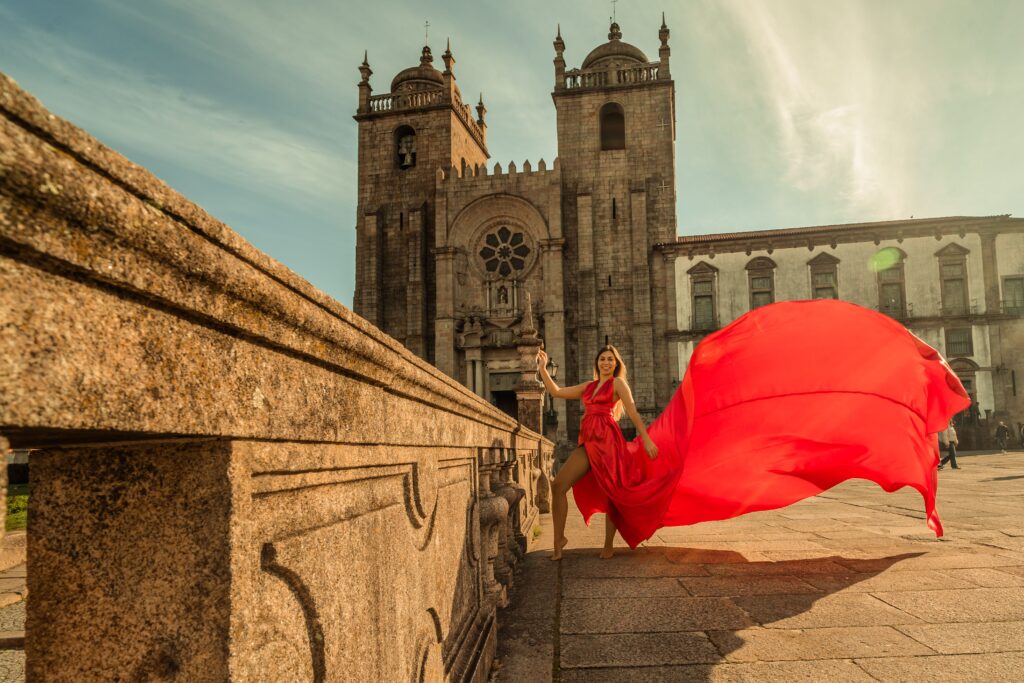
By mid-morning, make your way to Porto Cathedral (Sé do Porto), perched above Ribeira with sweeping views over the rooftops to the river. It’s not the most ornate cathedral in Portugal, but the terrace outside is one of the best free viewpoints in the city.
From there, walk down toward the water and cross the Dom Luís I Bridge — the double-decker iron bridge that’s become Porto’s unofficial symbol. Cross on the upper level for the views. Then, loop back on the lower one, which puts you right at the riverbank in Vila Nova de Gaia, technically a separate town but functionally Porto’s port wine district.
This is where you’ll spend your afternoon. Gaia is home to the historic port wine lodges Graham’s, Taylor’s, Ferreira, and Calém. Most of these offer tours ending in a tasting. You don’t need to book all of them; pick one or two. Graham’s has arguably the best view from its terrace, while Taylor’s is a favorite for its cellar tour and quieter crowd.
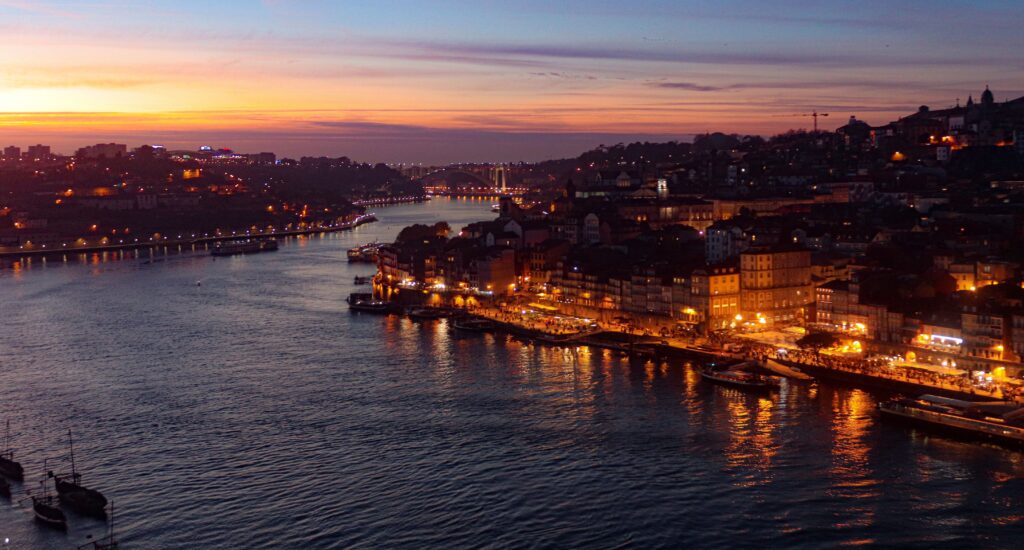
As the sun starts to drop, grab a spot along the Gaia riverbank for the classic postcard shot. The colorful Ribeira houses across the water, the iron bridge overhead, and the sky doing something impressive over it all.
Dinner: Head back across the bridge and eat in Ribeira itself. This is the touristy end of town, so prices are a little higher, but the riverside setting is worth it for your first night. Order the grilled fish or, if you’re feeling ambitious, tripe. Porto locals are nicknamed “tripeiros” for a reason.
Explore Porto Hotels

Day 2: Azulejos, Bookshops, and the Real Porto
Day two is for the parts of Porto that don’t show up on postcards quite as often, even though some of them absolutely should.
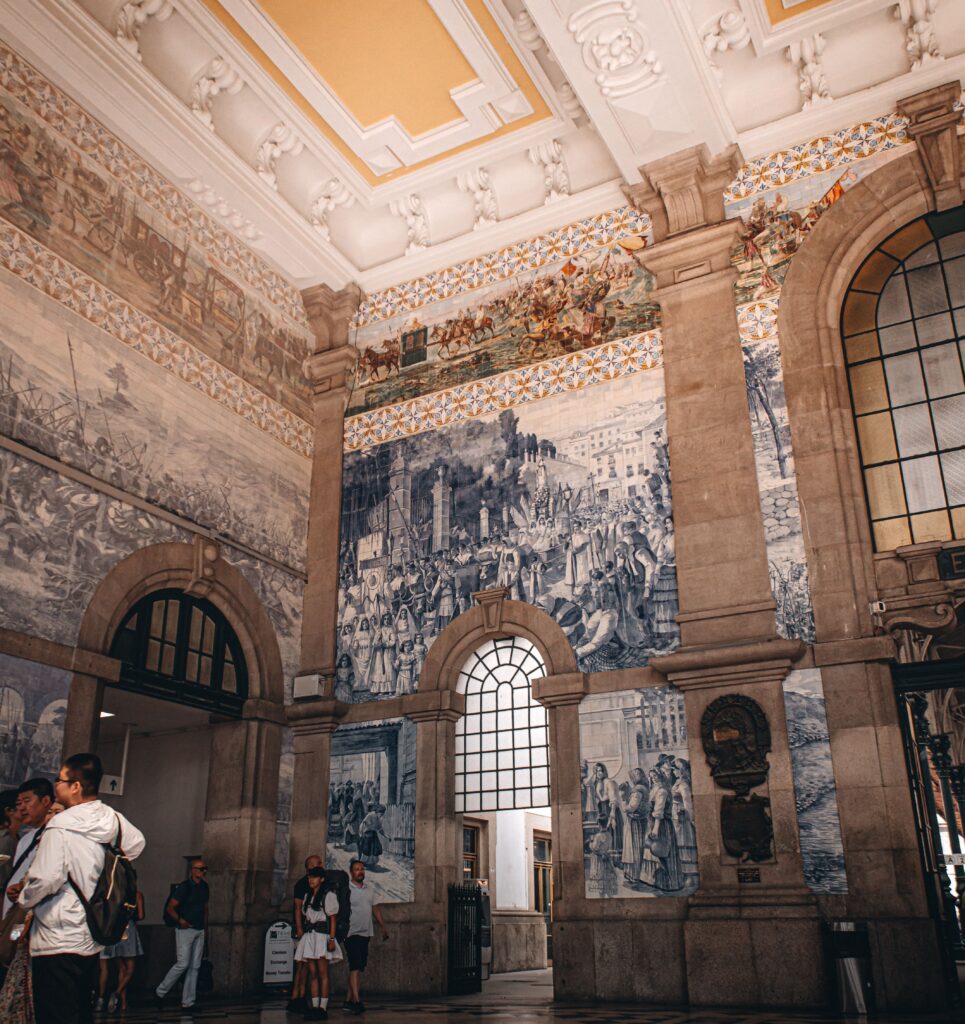
Start at São Bento train station, which sounds like an odd first stop until you walk inside and see it — the entrance hall is covered floor to ceiling in roughly 20,000 hand-painted azulejo tiles depicting scenes from Portuguese history. It’s free, it’s five minutes, and it’s one of the most striking interiors in the city.
From there, walk to Livraria Lello, the ornate wooden bookshop with the curling staircase that’s often cited (with some dispute) as inspiration for Harry Potter’s Hogwarts library. It’s genuinely beautiful, but also genuinely crowded. You’ll need to buy a timed ticket in advance, which is redeemable against a book purchase. Go early or accept the wait.
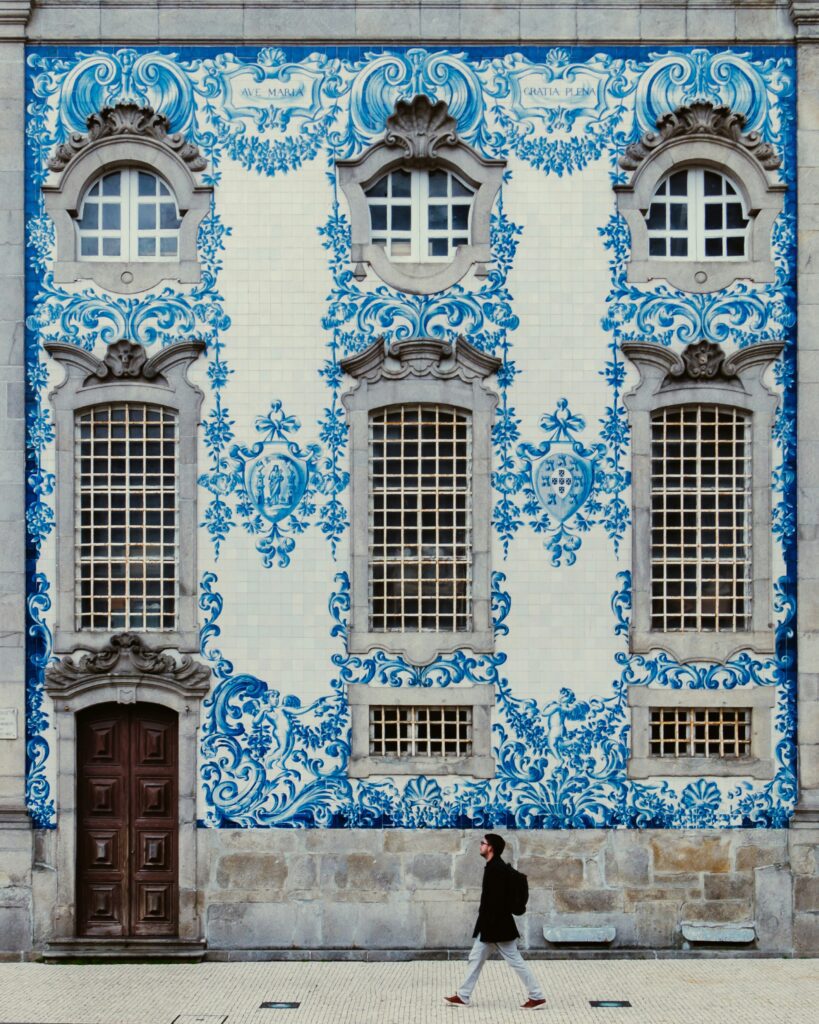
Next, head toward Igreja do Carmo and Igreja das Carmelitas — two churches standing almost side by side, separated by what’s said to be the narrowest house in Porto (built to keep the two churches from touching, since one was for monks and the other for nuns). The exterior of Igreja do Carmo is covered in another spectacular blue-and-white azulejo mural. Worth seeing even if you skip the interior.
By now you’ve earned lunch. Head to the Bolhão Market, recently restored, for fresh produce, cheese, and a proper sit-down lunch stall. It’s a good spot to eat like a local without a reservation.
Spend your afternoon in the Cedofeita and Miguel Bombarda neighborhoods. Porto’s arts district, full of independent galleries, vintage shops, and street art. It’s a good antidote if the historic center has started to feel like a checklist.
Dinner: This is the night to eat a francesinha, Porto’s signature dish — a towering sandwich of layered meats, melted cheese, and a beer-and-tomato sauce, usually served with a fried egg on top and fries on the side. It is not a light meal. It is not meant to be.
Day 3: The Douro Valley (or Slow Mornings, If You’d Rather Stay)
Your third day has two good options, depending on your pace.
Option A: Day trip to the Douro Valley. This is the terraced wine region an hour or so outside Porto. It’s worth the trip if you have even a passing interest in wine or dramatic landscapes. Trains run regularly from São Bento to Peso da Régua and Pinhão, both good bases for exploring vineyards along the river. Several tour operators also run half-day and full-day trips. These include a river cruise and winery visits, which is the easier option if you don’t want to plan logistics yourself. The hillsides — layered with vines in tight terraces down to the water — are genuinely one of Europe’s more striking landscapes, and far less crowded than similar wine regions in France or Italy.
Option B: Stay in Porto. If you’d rather not rush, spend your last day at a slower pace. Walk along the Foz do Douro, where the river meets the Atlantic, past the lighthouse and along the coastal promenade. It’s a different Porto out here — breezier, more residential, dotted with seafood restaurants that locals actually frequent. Follow it up with a visit to the Serralves Museum and Park if you want some contemporary art and beautifully landscaped gardens in the same stop.
Whichever option you choose, save your final evening for the Miradouro da Vitória. One of Porto’s best sunset viewpoints, tucked into a quiet residential street above Ribeira. It’s less known than the main lookouts, which means you’ll likely have the view mostly to yourself.
Last dinner: Go back to whichever meal impressed you most over the past three days and order it again. You’ve earned the repeat.
Explore Porto Hotels
Practical Notes
Getting around: Porto’s historic center is compact and walkable, though hilly. Expect some genuine climbing between the river and the upper town. The metro and tram network covers everything beyond that, and a Andante card (the reloadable transit pass) works across all of it.
Where to stay: Ribeira puts you in the middle of the postcard views but comes with tourist-level prices and noise. Cedofeita or Bonfim offer a quieter, more local base that’s still an easy walk into the center.
Best time to visit: Late spring (May–June) and early fall (September–October) hit the sweet spot — warm enough for riverside evenings, cool enough that the hills don’t feel punishing, and without the peak summer crowds.
Budget: Porto remains noticeably cheaper than Lisbon, let alone Western Europe’s bigger capitals. A sit-down lunch runs €8–12, a port wine tasting with tour is typically €15–25, and a comfortable mid-range hotel room can be found for €70–100 a night.
Three days is enough to fall for Porto — the tiled facades, the port cellars, the way the whole city tilts toward the river. It’s rarely enough to actually finish it, which, if you ask most people who’ve been, is exactly the point.