

Europe’s Travel Rules: What You Need to Know for 2025‑26
Europe is welcoming travellers—but with a revamped set of border rules to modernise travel and strengthen security. If you’re planning a trip to the Schengen Area or other European destinations in the near future, here’s your guide to navigating the changes, avoiding surprises, and making the most of your journey.
A New Border Landscape
Introducing the Entry/Exit System (EES)
From 12 October 2025, the European Commission (EC) launched the new Entry/Exit System (EES) for non‑EU nationals entering the Schengen Area.
Here’s what that means in practice:
- On first arrival into the Schengen zone (air, land or sea), travellers from non‑EU countries will need to register biometric data: facial image and fingerprints
- Passport details, entry/exit dates and border‐crossing information will be logged digitally, replacing (eventually) the traditional passport stamp.
- After the first registration, subsequent entries during the validity period require a much quicker verification of the existing data.
- The data remains valid for three years for travellers who comply with short‑stay rules (up to 90 days in a 180‑day period); in cases of overstaying, the record can be kept up to five years.
- The rollout is phased: although the system began 12 Oct 2025, full deployment across all external Schengen border crossings is scheduled by 10 April 2026. During this time, manual stamps may continue in some locations.
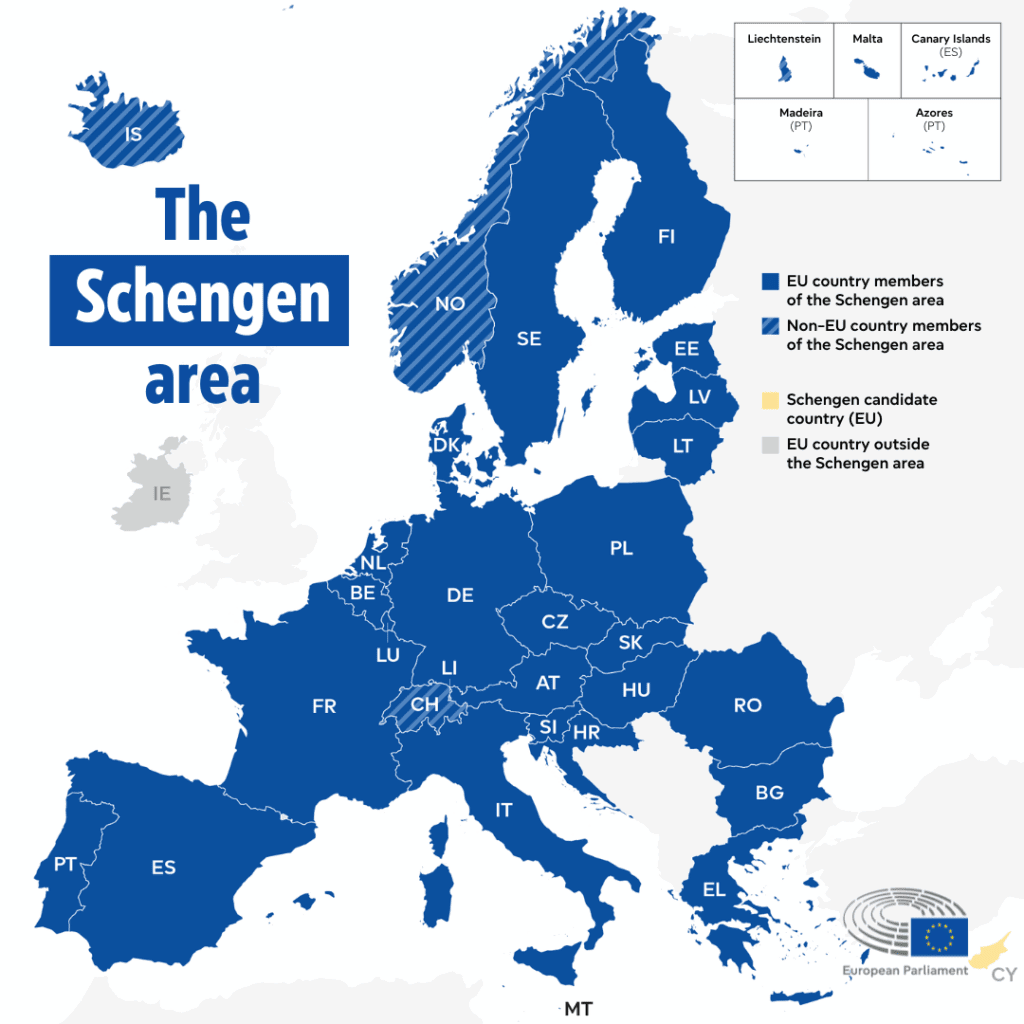
What about the European Travel Information and Authorization System (ETIAS)?
This is the companion measure to EES. In short:
- ETIAS will require travellers from visa‑exempt third countries to apply online for travel authorisation before they arrive, similar to the U.S. ESTA.
- However, ETIAS is not yet mandatory. The earliest full enforcement is expected in late 2026/2027, following the full rollout of EES.
- This means, for the coming months, your main new travel requirement is the biometric check (EES) rather than the pre‑travel authorisation (ETIAS).
What This Means for You as a Traveller-Who is Affected?
If you are a citizen of a non‑EU country and you plan a short stay (up to 90 days in any 180‑day period) in the Schengen area, then you’ll likely be affected.
Travellers who don’t have to comply:
- EU or EEA nationals and their family members
- Non‑EU travellers holding residence permits in an EU/Schengen country (i.e., long‑stay visa / residency) may be exempt from biometric registration under the EES.
- Children under age 12 are not required to give fingerprints (though other parts of registration still apply) in many cases.
What You’ll Need to Do
- On arrival: Be prepared to use or be directed to automated kiosks or border booths. There your passport will be scanned and biometric data taken.
- If this is your first time under EES, expect slightly longer border checks. Arrive earlier than usual, especially during busy seasons or at major airports.
- Keep valid travel documentation: proof of accommodation, return ticket, sufficient funds and travel/medical insurance may be checked. Some border authorities may ask for these more strictly under the new system.
- Remember the 90/180 rule still applies: you may stay up to 90 days within any 180‑day period running across Schengen states. Make sure your entry/exit dates comply.

Travelling Smoothly: Tips & Tricks
- Check your passport validity: Many European countries require your passport to be valid for at least 3–6 months beyond your stay—always check for your specific destination.
- Save copies: Photograph or scan your passport, travel insurance, and booking confirmations so you have backups.
- Use e‑gates if available: If offered, EU/EEA citizens and biometric‑enabled travellers often get faster processing; for non‑EU travellers, you may still need to queue at staffed booths.
- Select quieter arrival points: If possible, fly into less congested airports or arrive off‑peak to reduce wait times at border controls. This could be critical during the transition period when systems may cause delays.
- Keep your trip under 90 days: If you plan to enter multiple Schengen states, track your days carefully—overstays can lead to fines or bans under the new system.
Explore Europe Hotels

Why These Changes Are Happening
A few motivations behind the shift:
- The EU wants to tighten external border security, enhance its ability to detect overstayers and identity fraud, and modernise border checks.
- Moving from manual stamps to digital records allows more accurate tracking of entries and exits, a key element of modern border management.
- The phased rollout (six‑month period) provides flexibility for member states to adapt, minimise disruption and ensure systems are reliable.

What to Expect: The Travel Experience At the Border
When you reach border control, you might see signs indicating “EES registration” or “non‑EU nationals” lanes. You will:
- Present your passport like always
- Possibly be directed to a kiosk where your passport is scanned, your photo taken (photo of face) and fingerprints collected (unless exempt)
- Your entry is entered into the database; on future visits your biometric data may be used for fast verification
- If your first entry under EES registration, you may be asked additional questions or documents to confirm short‑stay eligibility
On Future Visits
Once your data is in the system (valid up to three years), your subsequent entries in Schengen should be faster: only a quick verification rather than full registration.
During Transition
Because it’s a phased rollout, some border crossings may still stamp passports and may not yet have biometric kiosks. Don’t be caught unaware. Expect that stamps may still appear until full implementation (April 2026).
How This Affects Popular Travel Destinations & Routes
- Major airports (Paris–CDG, Amsterdam, Munich, Rome, Barcelona) will likely see higher volumes and possibly extended processing times during the early phase of EES.
- Land borders, ferry ports or train crossings may lag slightly in tech deployment—factor in extra time if travelling by Eurostar, ferry or car.
- Multi‑country itineraries: If you travel across several Schengen countries (for example France → Italy → Spain) make sure your total stay doesn’t exceed 90 days in the 180‑day window. The new system makes tracking easier for authorities.
- Cruise & day‑trip visitors: If stopping in Schengen countries even for a short visit, you may still need to pass through the EES checks—so ensure your documentation is in order.
- UK travellers: While the UK is no longer part of Schengen, British travellers entering the EU under visa‑free short‑stay rules are considered “third‑country nationals” for the purposes of EES and are therefore impacted.
Explore Europe Hotels
Looking Ahead: What’s NexT
Preparing for an Easier, Smarter Trip
Yes — the new rules add a layer of border formality for non‑EU travellers. But they aren’t meant to make travel harder; in fact, once you’ve registered under EES, your future trips should be smoother and quicker.
Here’s your simple checklist before departure:
- Check if you are non‑EU and staying under 90 days (if yes → new rules apply)
- Ensure your passport is valid (check months beyond departure)
- Carry proof of accommodation, return ticket, and travel insurance
- Arrive early at the border, especially at major hubs
- Be prepared for biometric registration on first visit to Schengen
- Track your days of stay across the Schengen area — don’t overstay
- After your first visit, enjoy faster re‑entry on subsequent trips
- Keep aware: if you’re travelling after 2026, you may also need to apply for ETIAS
Europe is open and ready—but more digital, efficient and modern than ever. Take note of these updates, plan ahead, and you’ll breeze through the borders and straight into the adventure. Bon voyage!